Emotional Intelligence
A child can learn quickly, solve complex problems, and show exceptional intellectual ability while struggling to understand their feelings, get along with others, or cope with disappointment. Intellectual ability and emotional maturity are not the same, and they do not develop in exactly the same way. The observation that newer generations score higher on intelligence tests while showing weaker emotional and social skills is a starting point for reflection, not a universally established fact about all children. It raises a question that can receive too little attention in parenting: are we teaching children only to be capable and successful, or are we also helping them understand themselves, build healthy relationships, and face life’s difficulties?
In this article
Understanding emotional intelligence
Emotional intelligence brings together skills that help children recognize and understand their feelings, express them in ways other people can understand, and avoid hurting themselves or anyone else. It includes recognizing other people’s feelings, empathy, kindness, respect, cooperation, and a willingness to work together to solve problems. As these skills develop, children gradually learn that not every wish can be fulfilled immediately, that some rewards are worth waiting for, and that a setback need not mean giving up. Persistence, self-motivation, hope, an optimistic outlook, and trust in themselves and other people are all part of this process. Together, these qualities influence how children see themselves, respond to everyday challenges, and build relationships.
Why do emotional skills receive less attention than intellectual ones?
From early childhood, parents look for opportunities to help their children learn. Sports, foreign languages, music, computers, and many other activities are offered in the hope that children will grow up more capable, fulfilled, and prepared for life. Yet knowledge and intellectual ability alone cannot equip anyone for every situation. In recent decades, emotional skills have attracted increasing attention, both for their role in relationships and for their contribution to achievements commonly described as success in life. Some writers even consider emotional intelligence more important than scores on conventional intelligence tests. That is a view, not a universal ranking of abilities. Even so, opportunities to develop emotional skills are often left to chance, although children can learn them through everyday parenting and experience. One possible explanation is that we do not teach these skills consciously and consistently enough. Adults also do not always model the behavior they hope children will acquire. Children watch how people treat one another at home, in public, and in ordinary interactions. If they repeatedly hear that honesty, kindness, and understanding others no longer pay off, those messages shape their ideas about what is useful or desirable. Parents therefore influence their children’s values not only through direct teaching, but also through their comments, actions, and the way they talk about other people.
Why the early years matter
Cognitive and emotional development both reflect several interacting influences. Emotional skills can develop through learning, experience, and thoughtful parenting; this does not mean that parenting has little importance for cognitive development. Early childhood is a particularly important period, when children rapidly acquire new ways of behaving and responding while their brains undergo significant developmental changes. Experiences during these years help shape the patterns through which they later understand situations, experience feelings, and respond to difficulties. Everyday relationships gradually give children a repertoire for dealing with problems, disappointment, and challenges. The aim is not simply to prepare them for achievement, but to support their growth into contented, healthy, emotionally grounded people.
How parents can unintentionally make emotional development harder
Children are born able to experience feelings, but they gradually learn to recognize, understand, and express them through relationships with the people who care for them. In the early years, adults’ responses to emotional reactions are especially important. Noticing, accepting, and naming a child’s feelings, and helping the child express them appropriately, creates opportunities for emotional understanding. When feelings are persistently overlooked, misunderstood, or dismissed, children may learn to suppress, hide, or deny them instead. Their need for attention and involvement therefore extends beyond food, hygiene, and physical safety. Children also need an adult who takes part in their emotional world.
Telling children what they must not feel
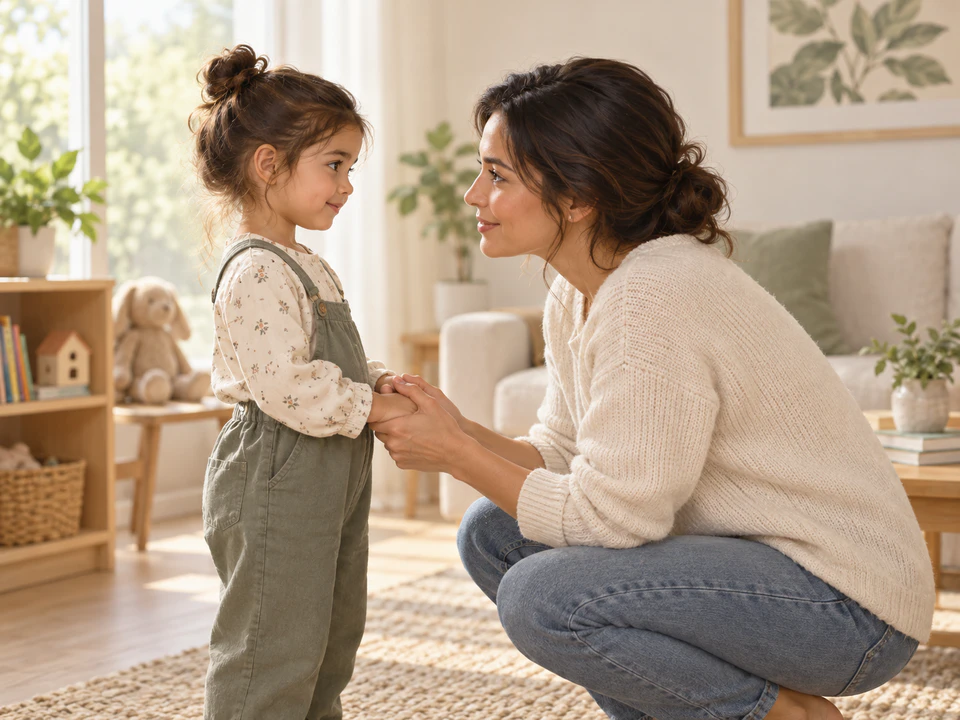
Parents often try to stop children’s feelings because those feelings worry or upset them, or seem out of proportion. The intention may be entirely caring: to calm a child or protect them from distress. Even so, children may learn to conceal their real reactions to avoid adult disapproval. From a young age, they may be told not to feel angry, sad, or afraid. Sometimes adults insist that children are not hungry, thirsty, or tired when they are trying to communicate precisely those needs. Rage, jealousy, envy, hatred, and despair may be treated as unacceptable, but even pleasant feelings, such as intense joy or a first crush, can be discouraged. Children may hear that this is no time to be excited, or that there is no reason to be afraid, as though every feeling requires a logical justification. Matters become more complicated when children have mixed feelings about someone close to them. A younger brother’s arrival, for example, may provoke such jealousy that a child angrily wishes he had never been born. An adult may respond by insisting that the child loves the brother, rather than acknowledging the feeling being expressed. Something similar happens when children are hurt or receive an injection and are told it does not hurt, is nothing to worry about, or that they are overreacting. Such messages can be especially confusing when they come from someone the child trusts. Imagine being in genuine pain while a person close to you insists you are making it up. It would be equally uncomfortable to be told that you love someone you strongly dislike simply because other people consider that person good or well disposed toward you.
What children may conclude when their feelings are rejected
When adults repeatedly dismiss a child’s feelings, the child may begin to believe those feelings are unimportant, unwanted, or unacceptable. That conclusion may reach beyond emotions: children may feel that they themselves, just as they are, are not good enough. Instead of learning that feelings are a natural part of being human, they may believe they must become someone different to deserve their parents’ acceptance and love. A negative self-image and a sense of inferiority can grow from such experiences. Children who doubt their worth may struggle to recognize their strengths and abilities, use them less confidently, and stop trying. As a result, they may achieve less than their capabilities would otherwise allow. The opposite pattern is also possible: a child works exceptionally hard, earns excellent results, and constantly tries to prove their worth, yet still feels inadequate, dissatisfied with themselves, and sometimes low in mood.
Parents’ emotional awareness also shapes a child’s development
Children learn about feelings not only from what adults say, but also from how adults handle their own emotions. Supporting a child’s emotional intelligence therefore includes a parent’s willingness to understand themselves better. Can we recognize when we are sad, worried, angry, or disappointed? Can we put our feelings into words, or is it easier to push them aside? Do we accept our emotional reactions or constantly fight against them? Do we understand their connection with our thoughts and behavior? Are we aware of the ways we can influence our mood? These questions matter because difficulty recognizing feelings can also make them harder to manage. Problems recognizing and expressing emotions can accompany psychological and physical difficulties, including depression. Such an association does not establish a cause, nor does it mean that every instance of holding back an emotion is harmful.
Understanding feelings and choosing how to respond
Emotional self-management involves noticing our mood, recognizing changes, and choosing our response deliberately. It can be a valuable resource in everyday life and in working toward our goals. Emotions can be understood as a source of inner energy, much as fuel helps a car move. They are part of our experience, but they need not dictate every action. Even a powerful feeling can lead to different responses. Intense anger, for example, may be expressed through tears, shouting, an attack on another person, or withdrawal. Having a feeling is not the same as deciding how to express it. That distinction is central to emotional development: we do not have to deny feelings in order to learn to take responsibility for our behavior.
Children notice a parent’s mood even when nothing is said
Parents sometimes try to hide sadness, anger, or worry so that their children are not burdened by adult problems. The intention is often protective, yet children may notice that something has changed even when adults say nothing. Facial expressions, tone of voice, behavior, and emotional distance all convey information, but a child’s age and limited experience may make the cause difficult to understand. Preschool children often interpret events in relation to themselves. A child may therefore conclude that they caused a parent’s anger or sadness, even when the problem has nothing to do with them. They may begin to think that their parent is unhappy because they are not good enough, and then that they do not deserve love.
When children take responsibility for adult feelings
Misunderstanding a parent’s mood can lead children to painful beliefs about themselves. A child who feels responsible for someone’s anger or sadness may think that others would be better off without them, or that they should never have been born. They may say this aloud or keep it to themselves, developing an inner conversation shaped by guilt and a sense of being unwanted. Repeated negative beliefs can become entrenched ways of seeing oneself; the expression “life script” describes such a pattern here, not a diagnosis or a predetermined future. Ordinary childhood questions about death, through which children try to understand life and loss, are different from wanting to die, self-harm, or suicidal intent. Statements suggesting self-harm, a wish to die, or suicidal thoughts must be taken seriously and assessed immediately by a qualified mental health professional. If there is immediate danger, stay with the child and seek emergency medical help.
Talking to children about your own sadness or anger
When a parent is worried, angry, or sad, it helps to explain the feeling in age-appropriate language and, when it is true, make clear that the child did not cause it. It is just as important to say that these feelings do not change your love for them. If something the child did contributed to a problem, explain the specific behavior and its consequence without suggesting that the child is responsible for managing an adult’s emotions. The original suggestion of an appropriate consequence, or “disciplinary punishment,” is understood here as a calm, proportionate, age-appropriate boundary—not physical punishment, humiliation, or intimidation. The aim is to help children understand what they can put right, rather than leaving them trapped in vague guilt. Punishment does not, in itself, remove guilt. Children may express anger or disagreement with a parent without hurting themselves or others, instead of turning every negative feeling inward. Clear boundaries should be distinguished from repeatedly blaming children for an adult’s emotional state.
A child’s anger does not mean a parent has failed
Many parents find it hard when children respond to a request with anger, sadness, or open resistance. These reactions can prompt doubts about their parenting and a fear that they are not doing a good job. Yet setting a boundary sometimes leads to disappointment, especially when children are asked to do something they would rather avoid. If parents requested only what children already wanted to do, their role in guiding behavior would be very different. Responsible parenting therefore sometimes requires firmness, expectations, and limits, alongside patience and consistency. There is, however, a crucial distinction between occasionally setting an unwelcome boundary and being almost constantly unhappy while regularly taking frustration out on a child. In the latter situation, reassurance that the child is loved cannot easily undo the harm of repeated negative behavior.
What kind of parenting supports emotional development?
The approach favored here is authoritative parenting: warmth and responsiveness combined with clear expectations. Parental responsibilities and the child’s role are understood, so children know which decisions belong to adults and where they can and should take responsibility themselves. This relationship includes rules, guidance, and consistency, as well as an understanding of children’s needs. Within this approach, a parent who sets expectations consistently offers more support for emotional development than one who is very lenient and repeatedly gives in. Firmness does not mean giving up emotional closeness. Children need understanding and support alongside boundaries that help them gradually become more responsible.
Emotional skills grow through learning and experience
Emotional intelligence develops through more than conversations about feelings. It involves a broad range of abilities that can be encouraged through daily activities, relationships, and organized learning. These include moral values, empathy, cooperation, mutual trust, confidence, and optimism, together with caring for one’s own needs and other people’s well-being. Realistic thinking, problem-solving, communication, other social skills, nonverbal communication, making and maintaining friendships, participating in groups, good manners, and a sense of humor are also important. Children learn to respond to success and failure, build emotional resilience, recognize the intensity of their feelings, and gradually manage them. These experiences connect emotional development with growing psychological and physical capabilities.
Supporting emotional intelligence from the earliest years
In the first years of life, emotional learning rests on two connected processes: parents developing their own emotional intelligence, and consciously teaching children through words, experience, and everyday relationships. Talking about understanding, patience, or respect is not enough if children do not experience those values in practice. Play, time together, touch, massage, thoughtful parenting responses, and a parent’s understanding of their own stress are among the ways to nurture connection. Through these experiences, children can feel loved, accepted, and important to the people who care for them. The way adults treat them also becomes a model for how they may later relate to their parents and other people.
Emotional security and wider development
When parents help children believe in themselves through play, companionship, understanding, and support, they create favorable conditions for psychomotor and emotional development. Children who feel more secure may find it easier to use their abilities and take part in activities that help them grow. The source material also links this approach with preventing later difficulties, including depression, aggression, addiction, criminal behavior, and health problems. These complex outcomes cannot be reduced to a single cause, and no parenting approach can guarantee their prevention. A child’s difficulties are therefore not proof of parental failure. The important message is that early emotional experiences have a place in long-term well-being, not that they alone determine a child’s future.
Seventeen ways to support emotional development in preschool and school-age children
As children grow, their emotional needs become more complex, and everyday relationships offer more opportunities to understand themselves and other people. The following suggestions cover honesty, friendship, independence, persistence, boundaries, responsible media use, and healthy habits.
1. Make honesty a shared value
Children understand the importance of honesty more easily when they see it in their parents’ behavior. Adults should therefore be open and truthful with children while expecting the same in return. Honesty then becomes more than a rule imposed by a parent: it is a value children experience through mutual trust and everyday communication.
2. Explain important family difficulties in age-appropriate ways
Children often notice when something significant is happening in the family, even if adults do not discuss it. Completely concealing a problem may therefore add to their worry. When parents have serious disagreements or are separating, children need to understand that this is an adult problem. It may be difficult for the parents, but the adults are responsible for addressing it. Make clear that the child is not to blame and that repairing the parents’ relationship is neither their responsibility nor something they can control. Similar openness is helpful when a parent loses a job or someone in the family dies. Children do not need every intimate detail of adult life. They need truthful information they can understand, without unnecessary emotional burdens. Honesty also matters in how parents respond when children hide the truth. A lie does not automatically mean a child is dishonest by nature. Children may fear a parent’s intense anger or disappointment and try to avoid it. They might conceal a poor school grade to protect both themselves and the parent from an uncomfortable situation. Preschool children may also still find it difficult to separate real events from imagination. What looks like a lie to an adult may be an invented story without any intention to deceive.
3. Help children make and maintain friendships
Peer relationships give children opportunities to learn cooperation, mutual understanding, and how to sustain social connections. Parents can support this by making time for children to see their peers, inviting friends to birthdays, and arranging other occasions to get together. Avoid being overly critical of a child’s choice of friends; children also need room to develop their own relationships and learn through experience.
4. Teach courtesy and consideration
Kind, courteous behavior is an important part of social development. Children gradually need to learn to treat people with respect in different situations. A parent’s expectation of good manners carries more weight when adults model that same consideration themselves.
5. Encourage care for people who need help
Empathy can be nurtured through concrete experiences of doing something useful for another person. Encourage children to help children and adults who are ill, living in poverty, more vulnerable, or facing difficult circumstances. Taking part in community service can also help them understand other people’s needs and recognize that their own actions can make a positive difference.
6. Be consistent about the rules that matter
Giving in is sometimes less a considered parenting choice than a response to exhaustion and lack of time. An overwhelmed parent may find it easiest to give children what they want in order to gain a moment’s peace and finish necessary tasks. When that becomes a recurring pattern, however, rules grow less clear. The authoritative approach recommended here keeps adults responsible for important decisions and does not abandon boundaries simply because a child is unhappy with them.
7. Help children keep trying after a setback
Persistence grows when children have a chance to try again after something does not work the first time. Parents can patiently encourage another attempt, a different approach, or further effort. The aim is not to demand a perfect result, but to help children avoid seeing difficulty as an automatic reason to give up.
8. Do not take over problems children can handle themselves
In trying to help, parents sometimes unintentionally take away opportunities for independent learning. Regularly doing children’s homework or resolving every disagreement with peers can convey that they are not capable of managing challenges themselves. Over time, a child may accept that view and stop trying. It is more helpful to offer support while leaving responsibility for a task with the child when they can manage it. Adults do not need to step into every peer conflict automatically, unless there is a serious power imbalance, bullying, or another situation requiring protection. In terms of building confidence, a lower grade earned through a child’s own work may offer more educational value than an excellent grade achieved through someone else’s efforts.
9. Let children see that you are not perfect
Parents do not have to present their own childhood as an unbroken record of success and faultless behavior. Occasionally talking about weaknesses, difficulties, or mistakes can strengthen closeness and authority rooted in trust. Children then have a chance to understand that adults are not always successful at everything either. Acknowledging your shortcomings does not mean automatically allowing the same behavior in your child. Parents remain responsible for guiding children toward behavior they consider appropriate.
10. Limit television time
As a deliberately strict, preventive parenting approach, the author recommends limiting television to a total of one to two hours a week after the age of three. This is a consciously restrictive authorial recommendation, not a universal numerical limit set by WHO or the AAP. A higher upper limit in a guideline does not mean children need to spend that much time in front of a screen. Content also deserves attention: frequent exposure to television violence may be associated with reduced sensitivity to other people’s suffering, but that is not an inevitable outcome for every child. This approach aims to make more room for relationships, play, and other experiences, without claiming that every individual minute of viewing necessarily causes harm.
11. Take particular care with screens in early childhood
For children under three, the author recommends avoiding television and other screen content, including content on computers. This is a preventive parenting choice that prioritizes direct interaction, play, and real-world experiences. Concern about early brain development should not become a claim that every brief exposure to a screen causes damage. Professional guidance varies by age, content, and how media are used, so this stricter approach is not presented as a single rule shared by all health organizations. Its central message remains clear: relationships and screen-free activities take priority in the earliest years.
12. Distinguish digital possibilities from their limitations
Alongside preventive advice about screens, it is worth distinguishing among different digital activities. The source material suggests that some computer content and games might encourage particular emotional skills, but it does not specify which games, age groups, or abilities. That possibility should not be presented as evidence that all games benefit emotional development, or as a reason to disregard the recommended limits. Consider the specific content and how it is used rather than attributing the same effect to every digital activity.
13. Make time just for your child each day
Everyday connection does not always require lengthy or specially organized activities. What matters is finding at least a little time to play, spend time together, or talk. These moments offer opportunities to know one another better, build emotional closeness, and understand what the child is experiencing. Regular contact lets children experience a parent’s interest and presence.
14. Accept feelings while teaching responsible behavior
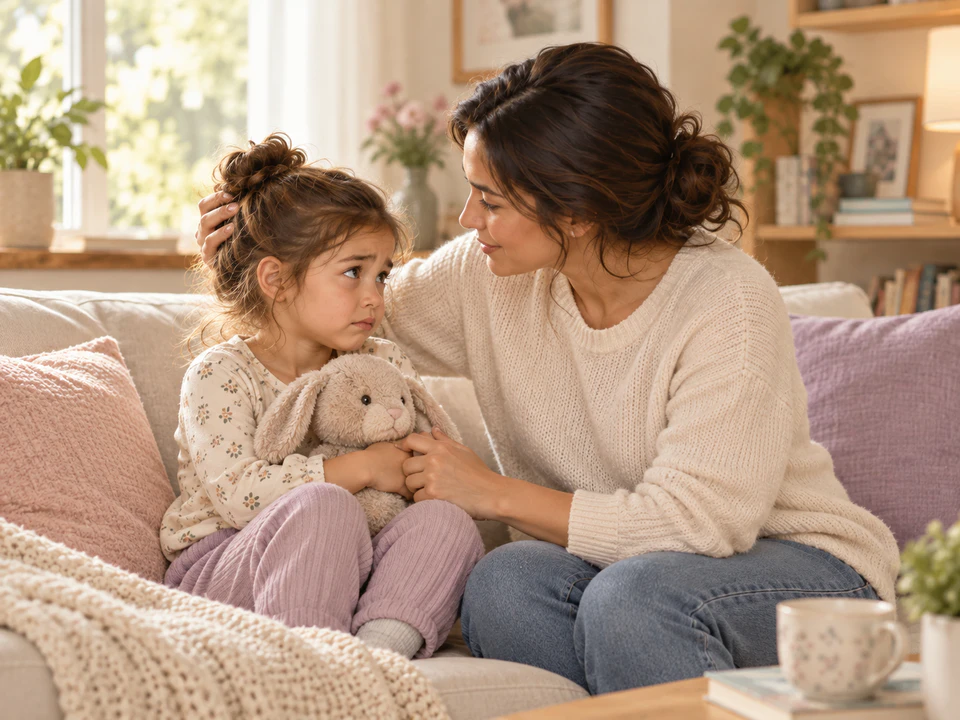
Children should be able to talk freely about what they feel without being told they should not feel that way. Feelings are not chosen in the same way as actions, and they do not disappear simply because someone calls them unreasonable. How feelings are expressed, however, can be learned and guided. A parent’s role is not to prohibit anger, sadness, or fear, but to help children recognize, understand, and express them without hurting themselves or others. Children may be angry while also learning that anger does not justify every kind of behavior.
15. Nurture a sense of humor
A sense of humor also has a place in emotional development. Sharing laughter and enjoying humor can be part of everyday family relationships. Through these experiences, children discover a lighter side of communication, and humor becomes another way to express themselves and connect with other people.
16. Build habits that support physical and emotional health
Supporting emotional development is connected with family life more broadly. Parents and children can work together on healthier habits, including balanced eating, movement, and activities suited to their abilities. Relaxation and ways of dealing with anxiety and stress also have a place. These habits are not only for children: parents can use them to develop their own resources for coping with daily pressures.
17. Model an optimistic approach to life
Children’s attitudes toward difficulties are shaped in part by watching how adults respond. When a parent tries to keep hope, look for solutions, and persevere, children see an example of optimistic thinking. Optimism is also learned from parents: we can look for possible solutions or ways to cope with problems even when we cannot resolve them completely. This does not mean ignoring difficulties. It means developing a willingness to understand them and keep looking for a way forward despite obstacles.